
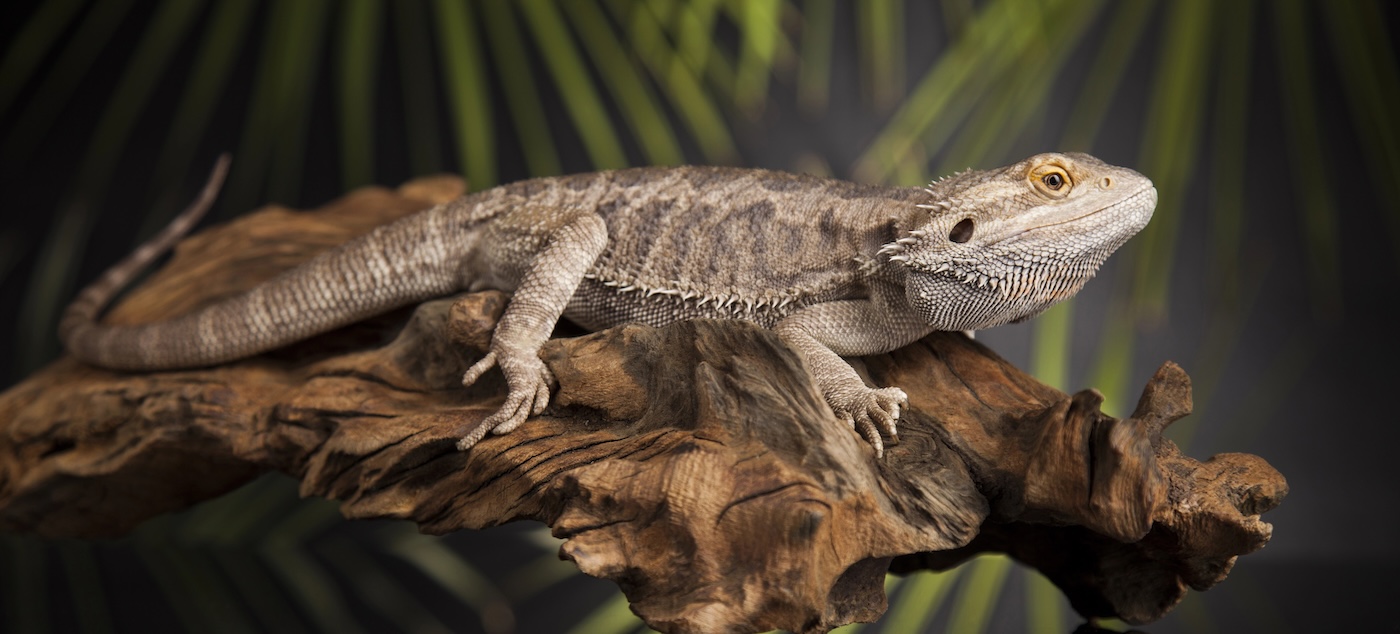
Care Guide for Bearded Dragon Reptile Pets
By Dr. Adam Cooner, Veterinarian, Alford Avenue Veterinary Hospital
Bearded Dragon Care: Quick Answers
What do bearded dragons need to stay healthy? A large, well-ventilated enclosure, a basking spot of 95-105°F with a cooler side near 80°F, a linear fluorescent UVB light for 8-12 hours per day, a diet of calcium-dusted insects plus dark leafy greens and vegetables, fresh water, and regular check-ups with a reptile-experienced veterinarian.
How big should a bearded dragon tank be? The minimum enclosure size for a hatchling bearded dragon is 10 gallons, but this must be upgraded to a 40-gallon enclosure for juveniles. An adult bearded dragon needs at least a 75-gallon enclosure, but most care recommendations are trending toward considerably larger enclosures: 4-6 feet long x 2 feed wide x 2 feet tall.
What temperature does a bearded dragon need? Basking spot 95–105°F, warm side about 90°F, cool side about 80°F, and nighttime temperatures in the 70s°F.
Do bearded dragons need UVB light? Yes. UVB lets bearded dragons make vitamin D3 so they can absorb calcium. Without it, they can develop metabolic bone disease. A window does not work, because glass filters out UVB.
What do bearded dragons eat? Bearded dragons are omnivores. Juveniles eat mostly insects (crickets, dubia roaches). Adults over 1 year of age should eat about 75% plants, mainly dark leafy greens, with gut-loaded, calcium-dusted insects making up the rest.
How long do bearded dragons live? On average, bearded dragons have a lifespan of about 10 years, but they can live to 15+ years with excellent care and some luck.
This Care Guide for Bearded Dragon reptile pets has been prepared in light of the fact that the inland or central bearded dragon (Pogona vitticeps) is the most common pet lizard seen at Alford Avenue Veterinary Hospital. This also is likely true for most veterinary practices that provide veterinary care for exotic pets.
Many health issues of bearded dragon pets originate from problems with their care and feeding so we’re providing a Care Guide for Bearded Dragon reptile pets that covers the basics & best practices of day-to-day care – plus the warning signs that mean it’s time to call your veterinarian.
Where Do Bearded Dragons Come From?
The bearded dragon is native to Australia. It is a daytime-active (diurnal) lizard that lives in the dry desert-like regions of central and eastern Australia. Its name comes from the spiny pouch, or “beard,” under its throat when it feels threatened or is showing dominance.
How Long Do Bearded Dragons Live & How Big Do They Get?
With good care, pet bearded dragons, on average, can live to about 10 years of age. With excellent care, they can live to 15+ years of age. Adults typically grow to 16–24 inches from nose to tail tip and usually reach adult size around 12–18 months of age. A bearded dragon is a long-term commitment. Plan for its adult-sized enclosure, lighting, food, and veterinary care from day one.
Where Can I Buy A Bearded Dragon In The United States?
Australia bans the export of its native wildlife, so the bearded dragons sold as pets in the U.S. all come from captive breeding. Ideally, buy your bearded dragon directly from a knowledgeable, conscientious breeder or adopt one from a reptile rescue. Bearded dragons in large pet stores often are stressed from shipping, being on constant display, and crowding. Stress and sharing space with other lizards can lead to disease and parasites.
Tip: Before you buy, look for a dragon that is alert, has clear eyes and a clean vent, has full-looking hips and a thick tail base, and shows no signs of stuck shed or wounds. Then schedule a new-pet exam with a reptile-experienced veterinarian within the first week or two.
What Sort of Housing Does A Bearded Dragon Need?
A hatchling bearded dragon can temporarily be housed in a 10-gallon terrarium but should be transitioned to a 40-gallon terrarium in short order. Adult bearded dragons, at the minimum, need an enclosure that is at least 75-gallons, but most care recommendations are trending toward larger enclosures of 120+ gallons, or 4 -6 feet x 2 feet x 2 feet. Our pets deserve more than the minimum and, generally, larger is better. That said, massive enclosures can be intimidating for newly purchased juveniles, and starting in an enclosure of about 40-gallons and working up to the larger adult enclosure is a good practice.
The enclosure should have a screen top. This keeps your dragon from escaping, protects it from other pets like cats, and allows airflow.
You can use several types of substrates (floor covering): paper towels or recycled paper bedding (e.g., CareFresh), reptile carpet, or tile. We do not recommend sand. Sand is certainly a more natural substrate, but a bearded dragon may swallow it by accident and develop an intestinal blockage (impaction). Whatever substrate you use, spot-clean it daily. Replace it completely on a regular schedule based on the size of your dragon and its enclosure.
Give your dragon a sturdy basking platform (a flat rock or branch) under the heat source, plus a few branches or ledges to climb. House each bearded dragon alone. They are solitary and may fight or compete for heat and food if kept together.
“Hide Boxes” Are An Important Part Of A Reptile Enclosure
Put a hide box at each end of the enclosure, one on the warm side and one on the cool side. A reptile hide box is a small, enclosed shelter that gives your pet a secure, private place to rest, digest, and feel safe.
During shedding, a “humid hide” can help. This is a hide box loosely packed with damp (not soaking wet) organic sphagnum moss. It creates a small pocket of higher humidity that helps with healthy shedding, hydration, and stress. The key benefits of a humid hide are:
- Aids in Shedding (Ecdysis): Keeps old skin moist and soft, which helps prevent stuck shed (dysecdysis) on sensitive areas like toes, the tail tip, and around the eyes.
- Prevents Dehydration: Gives your dragon a humid spot for extra hydration without raising the humidity of the whole enclosure too high. Bearded dragons do best at low overall humidity.
- Provides Security and Reduces Stress: Offers a dark, safe retreat that mimics the burrows and crevices bearded dragons use in the wild.
Water For Drinking, Water For Soaking
Bearded dragons need a shallow water bowl for drinking and soaking. Change the water daily and any time your bearded dragon poops in it.
We recommend weekly soaks in shallow, warm water (about 85–90°F) to help with hydration and shedding. Keep the water no deeper than your dragon’s elbows and always supervise your dragon while it soaks.
Heat & Lighting Needed For Desert Species
Bearded dragons are a desert species and need fairly high temperatures to thrive. Set up a temperature gradient: about 80°F on the cool end and 90°F on the warm end, with a basking spot of 95–105°F. Let nighttime temperatures drop into the 70s°F. Use at least two digital thermometers, or a temperature gun, to check these temperatures. Don’t guess.
| Enclosure Zone | Target Temperature |
| Basking spot | 95–105°F |
| Warm side | ~90°F |
| Cool side | ~80°F |
| Nighttime (whole enclosure) | Low-to-mid 70s°F |
Heat lamps and/or ceramic heat emitters are the best heat sources. Ceramic heat emitters make heat without light, so they can provide warmth at night after the lights are off. Heat tape or other under-tank heaters can help warm the enclosure, but heat from above is preferred.
Because of the risk of serious burns, never use electric heat rocks. Don’t let your bearded dragon touch any heat source directly, including heat lamps, heat tape, heating pads, or ceramic heat emitters. Use a thermostat to control heat sources.
UVB Lighting: Non-Negotiable for Bearded Dragons
Bearded dragons also need full-spectrum UV lighting. UVB lets them make vitamin D3, which they need to absorb calcium into the bloodstream. Without enough UVB, bearded dragons develop metabolic bone disease (MBD). UVA seems to support general well-being and appetite.
In general, we recommend a linear (tube) T5 high-output 10–12% fluorescent UVB bulb that covers about half to two-thirds of the enclosure’s length. Mount it over the basking area and put it on a timer for 8-12 hours per day on the same schedule as the daytime heat. Avoid compact or coil-type UVB bulbs. Most UV bulbs need replacing at least every 6 months. Some high-output bulbs are rated to last 12 months. Before trusting a bulb that long, check it with a UV Index meter such as a Solarmeter 6.5. For bearded dragons, aim for a UV Index of roughly 3–7 at the basking spot (Ferguson Zone 3).
Natural sunlight is ideal. When the weather allows, supervised time outdoors is a great idea. Give your dragon shade and water and watch closely for overheating. Never put a glass enclosure in direct sunlight. It can overheat to deadly temperatures within minutes. Also, putting the enclosure near a window is NOT enough. Glass filters out most or all of the UVB your dragon needs to make vitamin D3.
Diet & Feeding Tips For Bearded Dragons
Bearded dragons are omnivores. Their diet should include both insects and plants. Young bearded dragons eat mostly insects, and plants should become a bigger part of the diet as they grow. For adults (over 1 year old), plants should make up about 75% of the diet.
Insects
Good feeder insects include crickets and/or dubia roaches. Black soldier fly larvae are another good option. Mealworms and superworms are high in fat, so offer them only occasionally as snacks. We do NOT recommend wild-caught insects. NEVER feed fireflies (lightning bugs). They are extremely toxic and often fatal to bearded dragons.
“Gut-load” insects before feeding them to your bearded dragon. This means feeding the insects a calcium-rich commercial diet (e.g., Fluker’s calcium-fortified Cricket Quencher) for at least 1 day beforehand. Chopped fresh fruits and vegetables make feeder insects even more nutritious. Choose insects no larger than the space between your dragon’s eyes. Feed only what your bearded dragon can eat in 5–10 minutes. Do NOT leave crickets in the enclosure overnight. Crickets sometimes bite, and the wounds can become infected.
Greens & Vegetables
Dark, leafy greens should make up most (about 60%) of the plant portion of the diet. We recommend chopped or shredded collard greens, mustard greens, dandelion greens, bok choy, and spring mix lettuce. Feed spinach and kale only occasionally, because they can bind calcium and make less of it available to your bearded dragon. Chopped vegetables can make up the remaining 40% of the plant portion. Good choices include squashes, bell pepper, bean sprouts, and sweet potato. Offer fruit only occasionally as a treat.
How Often to Feed a Bearded Dragon
| Age / Size | Feeding Frequency | Diet Balance |
| Hatchling (< 4 in. long and/or < 5 g) | Twice daily | Mostly insects, plus finely chopped greens |
| Juvenile (up to ~1 year) | Once daily | Gradually shifting toward more plants |
| Adult (> 1 year) | Every 1–3 days | ~75% plants / ~25% insects |
What Dietary Supplements Keep A Bearded Dragon Healthy?
Most commercially sold insects have a poor calcium-to-phosphorus balance. Gut-loading helps. Even so, dust every insect feeding with a calcium supplement (usually calcium carbonate) like ReptiCalcium. Make sure the calcium supplement has no added phosphorus or vitamin D3. Put the insects in a plastic resealable bag with the calcium powder, shake to coat them, and feed them right away.
Every 2–4 weeks, use a multivitamin supplement like Repashy Calcium Plus in place of your regular calcium supplement. Your veterinarian may adjust this schedule based on your dragon’s age, health, and UVB setup.
Handling Your Bearded Dragon & Keeping Your Family Safe
Most bearded dragons tolerate gentle handling well. When picking one up, support its whole body, including the chest, belly, and back legs. Never lift it by the tail or a single limb. Short, calm, daily sessions help your dragon get used to you.
Like most reptiles, bearded dragons can carry Salmonella bacteria on their skin without looking sick. Follow these simple hygiene tips:
- Wash your hands with soap and water after touching your dragon, its food, or anything in its enclosure.
- Keep reptiles, bowls, and supplies out of the kitchen and away from food-prep areas.
- Supervise children closely. The CDC advises that children under 5 should not handle reptiles.
Brumation
Bearded dragons are responsive to lighting and temperature changes. Shorter periods of daylight and lower ambient temperatures can induce a slowdown in metabolism and a hibernation-like state that is often called brumation. A brumating dragon may sleep much more, hide, and eat very little or nothing for several weeks to a few months. However, if you maintain heating and the regular 12-hour light cycle within your bearded dragon’s enclosure, brumation is unlikely to occur. Sluggishness and lack of appetite also are signs of illnesses, including parasitism, infection, and metabolic bone disease. Before assuming your dragon is brumating, schedule a checkup and fecal exam with your veterinarian.
Signs Your Bearded Dragon May Be Sick
Reptiles instinctively hide illness, so by the time symptoms appear, a problem may already be advanced. Call your veterinarian if you notice any of the following:
| Warning Sign | Possible Causes |
| Lethargy, not eating, weight loss | Low temperatures, parasites, infection, impaction, MBD |
| Trembling, soft/swollen jaw, swollen or bowed legs | Metabolic bone disease (low UVB and/or calcium) |
| Open-mouth breathing at rest, mucus or bubbles from nose/mouth | Respiratory infection |
| Runny, bloody, or very smelly stool; no stool for a week or more | Parasites, impaction, dehydration |
| Straining, dragging back legs, swollen belly | Impaction, constipation, or reproductive tract disease |
| Yellow, brown, or crusty skin patches | Skin infection: bacterial, fungal, or both |
| Stuck shed on toes or tail tip; dark or dying tail tip | Low humidity, dehydration, secondary infection |
| Sunken eyes, wrinkled skin, thick orange/yellow urates | Dehydration |
Why Your Bearded Dragon Needs Regular Veterinary Checkups
Bearded dragons benefit from preventive care, just as dogs and cats do. We recommend:
- A new-pet exam within the first week or two after bringing your dragon home. This should include a fecal test for parasites.
- An annual wellness exam with a weight check, physical exam, and fecal test. We’ll also review your husbandry: enclosure, heat, UVB, diet, and supplements.
- Prompt sick visits for any of the warning signs above. Reptiles hide illness, so early care makes a big difference.
Bring photos of your enclosure setup, your UVB bulb type and install date, and a list of what you feed. These help us spot care issues quickly.
Bearded Dragon Care Checklist
Use these bearded dragon care tips as a quick routine:
| How Often | Task |
| Daily | Fresh water; feed (by age); spot-clean poop and uneaten food; check basking and cool-side temperatures; remove leftover live insects |
| Weekly | Warm supervised soak; wash water and food bowls; weigh your dragon |
| Every 2–4 weeks | Swap the calcium dusting for a multivitamin |
| Monthly | Full substrate change and enclosure disinfection (or sooner as needed) |
| Every 6 months | Replace UVB bulb (or test with a UV meter) |
| Yearly | Wellness exam and fecal test with a reptile-experienced veterinarian |
Bearded Dragon Care FAQ
How often should I take my bearded dragon to the vet?
Schedule a wellness exam within the first week or two after bringing a new bearded dragon home, then at least once a year. A yearly exam usually includes a weight check, a full physical, and a fecal test for parasites. Older dragons, and any dragon with a health problem, may need to be seen more often.
Why is my bearded dragon not eating?
Common reasons include enclosure temperatures that are too low, an old or wrong UVB bulb, stress, brumation, parasites, impaction, or illness. Check your temperatures and UVB setup first. If your dragon refuses food for more than a few days, is losing weight, or is also lethargic, schedule a veterinary exam.
Can bearded dragons eat fruit?
Yes, but only as an occasional treat. Fruit is high in sugar, and most of the plant portion of the diet should be dark leafy greens (about 60%) and vegetables (about 40%).
Is sand safe for bearded dragons?
We do not recommend loose sand. Bearded dragons can swallow it by accident, which may cause an intestinal blockage (impaction). Paper towels, recycled paper bedding, reptile carpet, or tile are safer choices. If you choose to use sand to provide a naturalistic enclosure, we recommend feeding your lizard on a separate surface.
How often should I replace my bearded dragon’s UVB bulb?
Most UVB bulbs lose output long before they burn out. Replace most bulbs every 6 months or check high-output T5 bulbs with a UV meter (such as a Solarmeter 6.5) and replace them once output drops, usually within about 12 months.
Can I house two bearded dragons together?
We do not recommend it. Bearded dragons are solitary. Housed together they often compete for heat and food, and they may injure each other. Two males can fight seriously. Each dragon should have its own enclosure.
What is brumation in bearded dragons?
Brumation is a seasonal slowdown like hibernation. It happens in fall and winter if light cycles and temperatures are allowed to change with the season. Illness can look the same, so have your veterinarian examine your dragon before assuming it is brumating.
What are signs of metabolic bone disease in bearded dragons?
Warning signs include weakness, trembling or twitching, a soft or swollen lower jaw, swollen limbs, bowed legs, trouble walking or lifting the body, and broken bones. Metabolic bone disease usually comes from too little UVB or calcium. It needs prompt veterinary care.
Can bearded dragons eat fireflies or wild-caught bugs?
Never feed fireflies (lightning bugs). They are highly toxic and often fatal to bearded dragons. We also advise against any wild-caught insects, which can carry parasites and pesticides.
Do bearded dragons carry Salmonella?
Like most reptiles, bearded dragons can carry Salmonella bacteria without looking sick. Wash your hands after handling your dragon or anything in its enclosure. Keep reptiles and their supplies out of the kitchen and supervise young children closely. The CDC advises that children under 5 should not handle reptiles.
Need a Reptile Vet in Hoover, AL? We Can Help.
Bearded dragons have very specific needs. Follow the bearded dragon care tips in this guide, and you’ll give your reptile pet a great chance at a long, healthy life.
Have an exotic pet and need a veterinary team experienced in reptile care? Alford Avenue Veterinary Hospital cares for a wide variety of exotic companion pets, including bearded dragons and other reptiles. Pet owners from Hoover, Birmingham, and beyond visit us for this care. Contact Alford Avenue Veterinary Hospital and schedule a bearded dragon wellness exam today!